


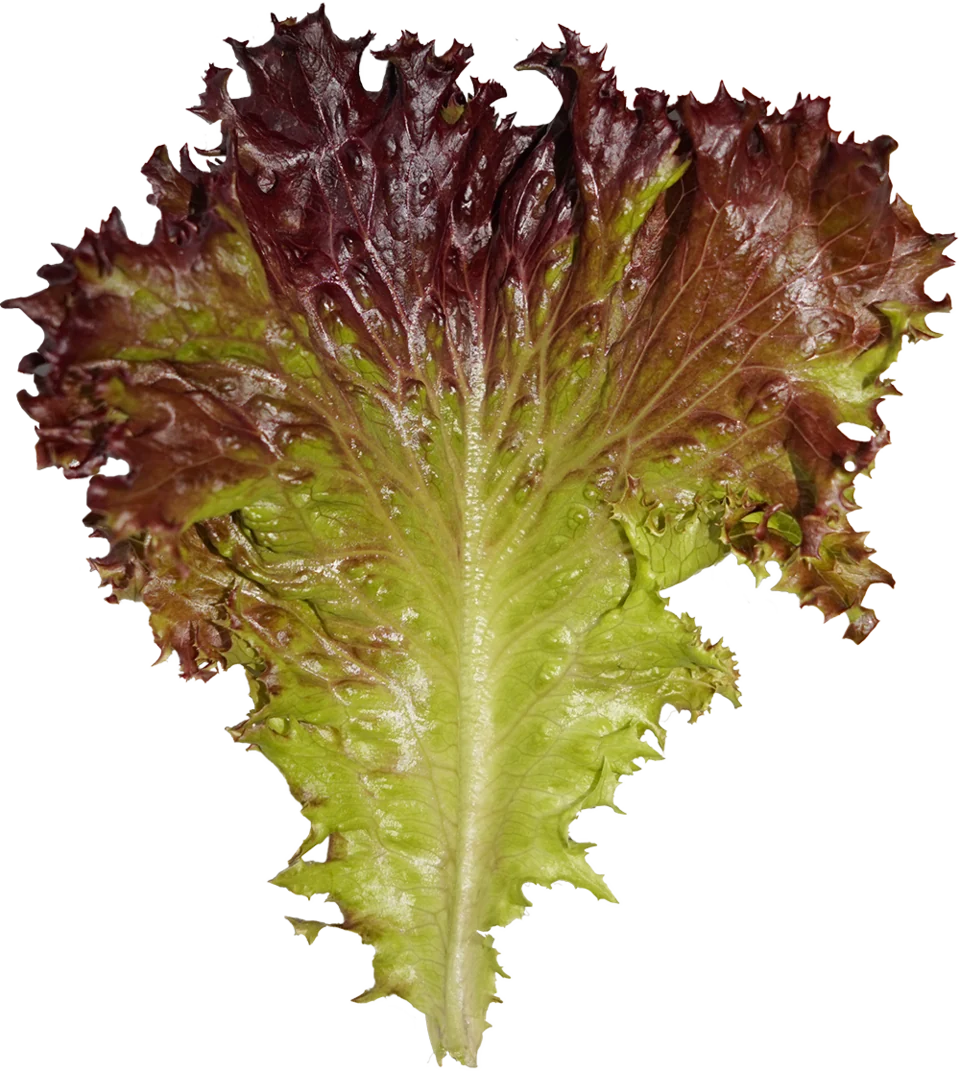
Can leafy greens travel by sea? A buyer’s eligibility checklist
By VegoFresh Editorial Team · Published
A sea route for leafy greens needs crop-specific evidence, a full journey map and an arrival grade. Use these five decision gates before booking.
Evidence and route conditions are named in the article. Results for one crop or setting should be checked against the buyer’s own arrival standard.
Can leafy greens travel by sea? Sometimes, but the answer has to be earned for a named crop, pack and route. The buyer needs evidence that the greens will pass an agreed arrival inspection and retain enough selling time after delivery. A storage result alone cannot establish either outcome.

Start by separating leafy crops. UC Davis guidance for spinach says quality loss becomes more likely after roughly 10–14 days under conventional storage, while its romaine and loose-leaf lettuce guidance gives different storage estimates under specified temperatures. These are crop-specific reference points, not a universal deadline or a ceiling on a separately tested preservation process. They explain why a buyer should never approve “leafy greens” as a single specification.
Industry discussion (anecdotal): An equipment seller’s note on summer leafy greens highlights field heat and time to pre-cooling. That is a useful planning prompt, but the post’s claimed loss and shelf-life figures are not verified shipment data. Ask for harvest-to-cooling timestamps and measured product temperatures for the actual lot. Source: Xiaohongshu note by Vacuum_fresh (reviewed 10 October 2026).
What must be true before booking an ocean route?
The first gate is the buyer’s commercial standard. “Still green” is too broad. Agree the permitted yellowing, wilt, decay, mechanical damage, trimmed weight and rejected-carton threshold before a trial. Specify the inspection point: at port, at the importer’s warehouse, or after local distribution. The same shipment can look different at each point, so the contract and trial should use the same location and method.
The second gate is time. Map harvest, shade, washing or processing, pre-cooling, packing, inland transfer, port dwell, sailing, customs, unloading and onward distribution. Add a realistic buffer for delay and the buyer’s desired selling period. The FAO’s cold-chain guidance treats cooling and temperature management as a continuous handling system. A chilled container cannot erase deterioration that started at harvest or during an unrefrigerated transfer.
The third gate is a crop-specific environment. Spinach needs a different review from lettuce, and whole lettuce differs from cut product. UC Davis notes that high carbon dioxide can injure intact romaine or loose-leaf lettuce under certain conditions. Its spinach guidance also notes ethylene sensitivity. This is why packaging, gas management, mixed-load compatibility and temperature must be validated together. FAO describes modified atmosphere as a supplement to sound temperature and humidity management, not a replacement for them.
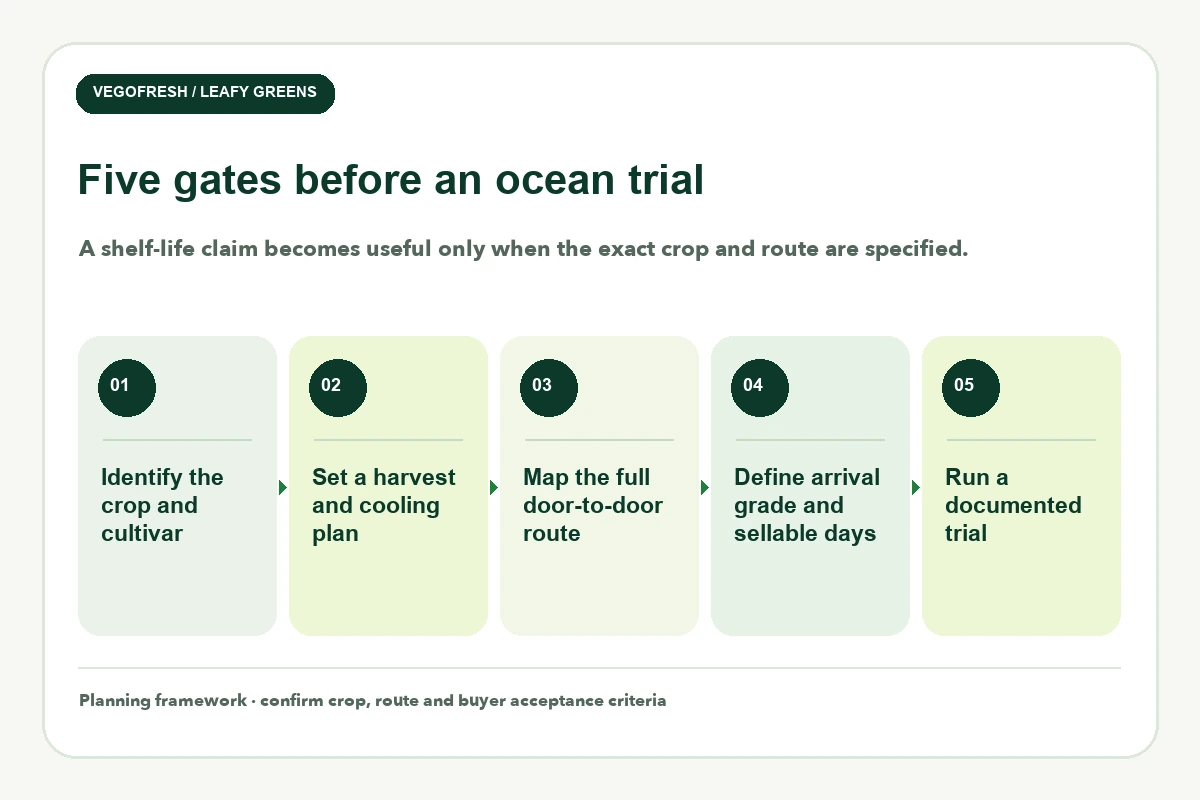
A five-gate buyer checklist
| Gate | Evidence to request | Decision it supports |
|---|---|---|
| Crop identity | Species, cultivar, origin, harvest maturity, whole or cut form | Whether existing data apply to this exact item |
| Buyer grade | Written defect limits, accepted weight and selling-window target | Whether the trial has a measurable pass standard |
| Full journey | Door-to-door timeline including dwell and local delivery | Whether the test covers the actual exposure period |
| Condition record | Pre-cooling record, logger position, product checks at handoffs | Whether a quality result can be interpreted |
| Arrival and hold | Grading on receipt plus a monitored post-arrival hold | Whether the buyer has time to sell accepted stock |
What existing evidence does, and does not, show
A 2010 public naval report described named leafy greens preserved aboard escort ships for periods longer than conventional storage estimates. That is a reported shipboard setting. The report does not identify a commercial supplier or document a modern refrigerated-container shipment and importer acceptance. It is a reason to investigate a process, not a substitute for the five gates above. Our guide to shelf-life evidence explains how to keep storage, transport and selling time distinct.
For VegoFresh, the right first conversation is therefore specific: spinach, bok choy or lettuce; the origin and destination; the desired delivery date; the pack; and the grade at receipt. We can then define a trial with the importer, rather than applying one “30-day” promise to all leaves.
When should air freight remain the plan?
If the route is long relative to the crop’s measured quality window, the retailer needs immediate stock, the temperature chain is not controlled, or no arrival and hold data exist for the proposed pack, a faster route may be the more responsible choice. The decision should be revisited when an actual trial provides accepted weight, remaining selling days and total landed cost. See how we structure route assessments or request a leafy-greens trial plan with your target grade and destination.
Turn the article into a test plan.
Tell us the crop, origin, destination and arrival standard. We can identify which records are relevant and what still needs validation.